


Somerset, Indiana: What is a "legitimate historical lens"

Heartland History Interview 4 - Memory/Loss/Meaning
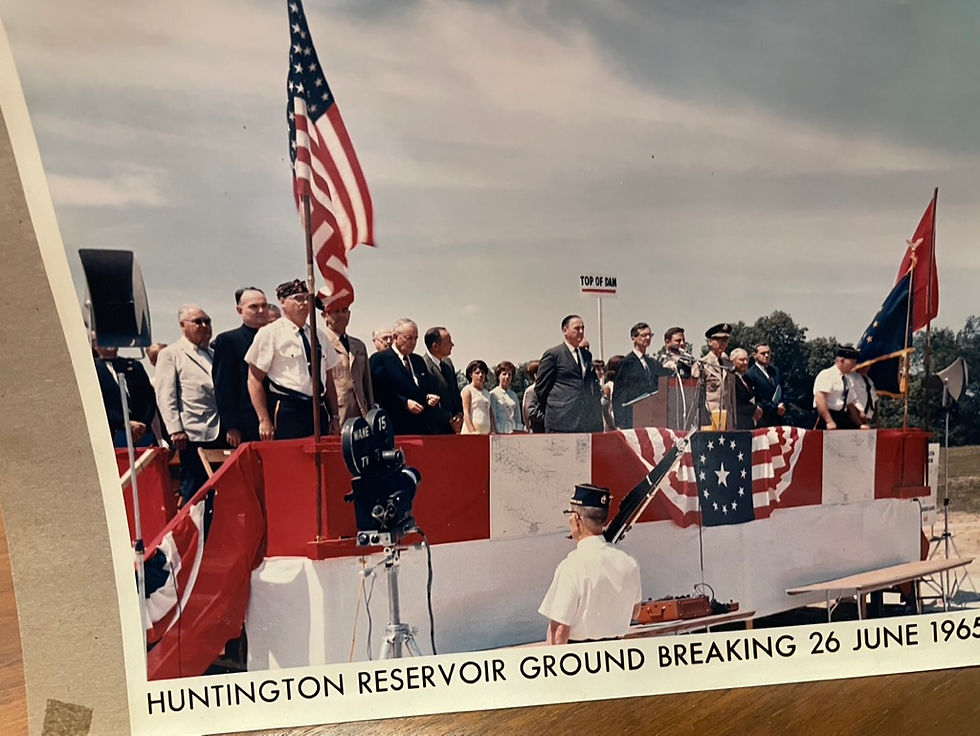
Prior to my When Once Destroyed interview with Joshua Kluever and Kevin Mason for the Midwest History Association's Heartland History podcast in March, I enjoyed answering their thoughtful questions about my work describing the destruction of Somerset, Indiana and surrounding farm land for the Mississsinewa Reservoir in the Upper Wabash Valley Flood Control Project as directed by the U.S. Army Corps of Engineers and the Indiana Flood Control and Water Resources Commission. For a few days I'll be sharing my responses here.
Memory/Loss/Meaning
The book is framed as a historical memoir. How did personal memory shape your interpretation of the historical record, and why did you choose that framing?

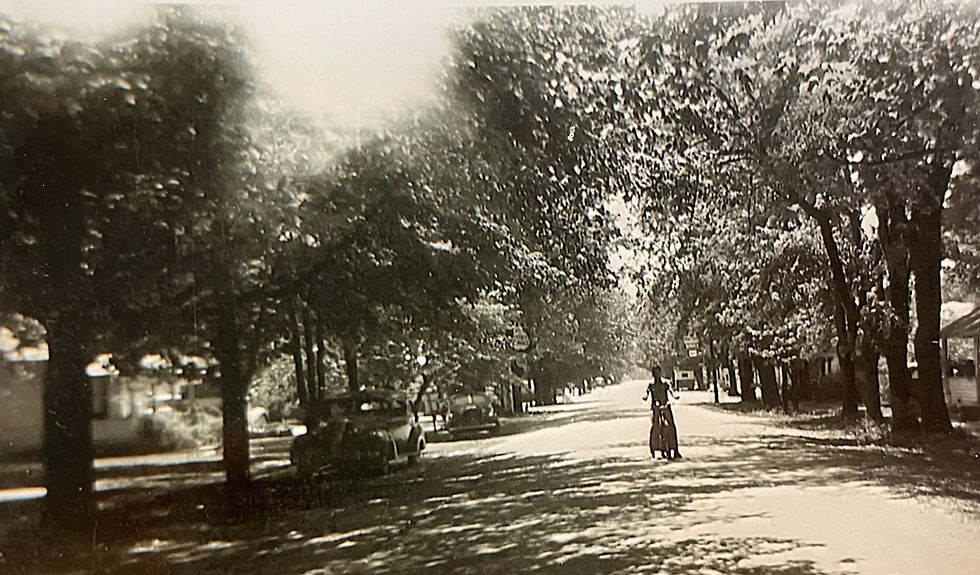
In telling my grandson about my dad, my intention was to explain how Dad was connected to what happened, but I know he was on the periphery of a lot of it. "How did this impact Dad?" was the question I set out to answer but I know it went beyond that. My interpretation was shaped by the fact that I knew “these people.” I remember the place. When I spoke to people down there, the voices were those of old friends, speaking in a manner of speaking familiar and therefore not forgotten. I was conscious of my Holocaust educator training throughout, wanting to tell the story of something historical from the perspective of the people who were the receivers of the events, not the initiators. The fact that I was talking to my grandson about Dad and his community and how it was destroyed and not creating a scholarly work gave me the freedom to do that. Up front, with the occasional asides reinforcing to the reader my acknowledgement that I’m not objective. However, that approach made verification of my sources as important to me, with my obligation to the community and its people, as it is to any scholarly work. I gotta get this right. Didn’t I say that Francis Roby was one of the people I wanted my account to do justice? I felt that way about everybody down there, but also about Dad and the new Vern.
How do you navigate the tension between remembering a place with affection and confronting its harder truths?
I suppose I didn’t see that there was difference between the two. I was born in Marion, Indiana. Google courthouse lawn. When I visited the concentration camp where Anne Frank died I talked to German high school teachers about how they teach the Holocaust. I’m a firm believer in the idea that fixing something starts with knowing that it’s broken. The US does a terrible job of that in our teaching of history.
What ethical responsibilities did you feel when writing about a community that can no longer speak for itself?
That’s a bit of a combination of the last two answers. As I said before, to get it right, to do right by the people in the community and at the same time be honest in confronting the harder truths. I’m telling the new Vern about the old Vern, through the lens of the powerless in the story so I didn’t worry about the powerful. I didn’t have to subscribe to their rules. To me “objectivity” contains a lot of telling the story the way the powerful want it told. Social media is breaking that down. I can see Gaza and I can see Minneapolis myself, without the filter of the NY Times.
How do silence and absence function in the book, particularly when sources disappear along with the town?
Directly, the absence of the community in the decision making and the secret silence of the perpetrators made it impossible for the town to protect itself. Also, silence was Dad’s sin, as I see it. It’s the sin of the community in the aftermath, as well. Why am I the guy revealing this stuff 60 years later? As soon as I saw the Ralph Roessler papers, I knew I was obligated to reveal what I had discovered.
What role does grief play in the narrative, and can grief itself be a legitimate historical lens?
It begins and ends with my grief for Dad’s death and with that naturally my regret at standing between him and his dream. Perhaps I’ve uncovered some regret at being one of the children for whom his dream was deferred for our benefit. I do think he was happy with the way the three of us turned out, college educated, good citizens. “Legitimate”? That’s something I’d love to talk more about (I’m loving answering these questions, by the way). That’s a reference to my earlier remark. Who decides what is a “legitimate historical lens?” Is the source of “legitimate historical lens” not similar to the perspective people who imposed this tragedy? Is my difficulty now in getting this story heard beyond my immediate communities not also part of a definition of “legitimate”?
Comments